Meaningful Memorial Gifts for a Grieving Spouse
For someone mourning a partner, gifts that keep growing can hold memory more gently than flowers. These thoughtful memorial ideas honor a shared life and offer continuity.
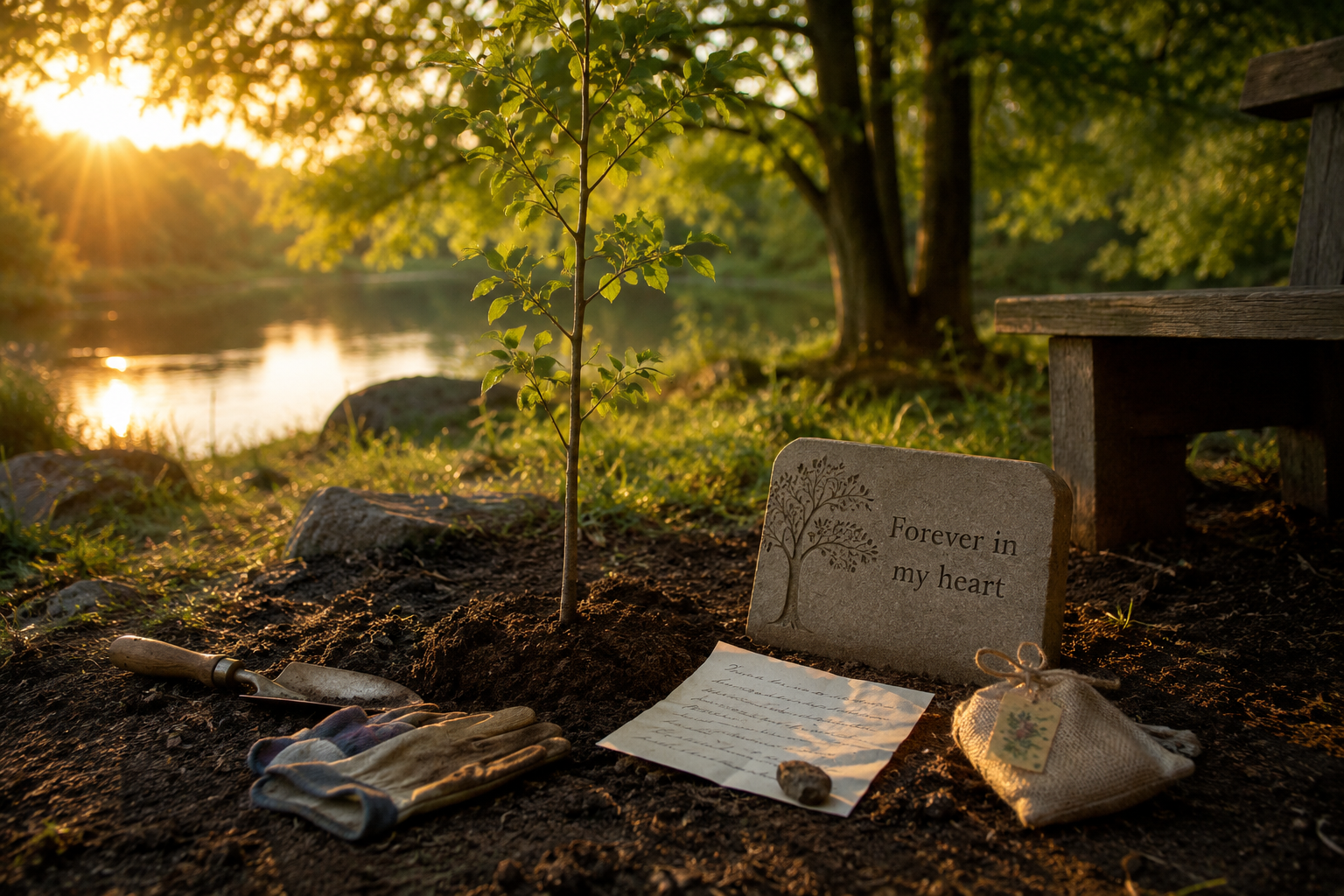
When someone has lost a spouse, ordinary gestures can feel thin. A living memorial can hold the weight of a life shared without demanding words that won't fit. This article gathers ideas for a grieving spouse—small, lasting acts that offer continuity rather than closure.
Why a living memorial matters
Loss reshapes the spaces where two people lived together. Clothes remain, routines continue, and the house holds echoes. A living memorial—a tree planted in a place that will grow each year—creates a persistent marker that is not ornamental, but practical: it moves through seasons, it changes with the years, and it occupies a place in the landscape rather than a drawer or shelf.
Who chooses this and when
Partners, adult children, close friends, and sometimes colleagues choose living memorials when they want to give something that lasts. It is often chosen at the funeral, on an anniversary, or months later when the immediacy of arrangements has passed. The gesture suits someone who values quiet continuity or who loved time outdoors, gardening, or shared rituals in nature.
Common moments that prompt this choice
- After a funeral, when the family seeks a meaningful follow-up
- On the first or second anniversary of the death
- For a spouse who loved gardening or the outdoors
- As a gift from friends who want a collective, enduring tribute
Practical ideas for memorial gifts
Each suggestion here is meant to be concrete and adaptable. They are not prescriptions. They are invitations: ways to hold a life in things that continue to exist.
- A tree planted in a cared-for reforestation project, with a certificate bearing the loved one’s name
- A small commemorative plaque paired with a sapling planted near home or in a shared garden
- A subscription to a seasonal tree-care or native-plant delivery service so the spouse receives living reminders
- A memory box of shared seeds, cuttings, or notes to be opened and planted on anniversaries
- Reason one: Continuity: A living gift continues to change. That movement gives time a place to land for people who do not want the finality of a single ceremony.
- Reason two: Presence: Unlike a card or flowers, a tree occupies physical space in the world. It becomes a place to visit, to sit beside, or to tie a ribbon to on difficult days.
- Reason three: Shared care: Planting can be communal. Friends and family can visit, plant, or tend the tree. Shared responsibility for care can feel less like a debt and more like a memory renewed.
Sentitree has been used by families who wanted a thoughtful alternative to floral tributes, and many have found the act of planting or dedicating a tree to be quietly consoling. A living memorial often feels appropriate for someone who loved the land or for couples who kept rituals in their garden.
Practical notes: choosing the species, deciding on a location, and arranging for a certificate or plaque are steps that can be handled by a gifting service or by family members. Some services also provide tracking updates so those who cannot visit in person can watch a tree grow over time.
Gifts that fit different needs
Not every grieving spouse wants the same thing. Here are simple pairings to consider:
- For the spouse who tended a garden: a young tree plus a worn, beloved tool restored and engraved
- For the spouse who kept routines: a small monthly remembrance ritual, like a shared playlist and a note to read beside the tree
- For the family far away: a planted tree in a reforestation project with an online certificate and photo updates
- For private mourning: a sapling planted quietly in a place chosen long ago
Services that arrange living memorials can streamline the practical work—handling species selection, permitting, and certificates—so families can focus on memory rather than logistics. Many families have linked a planted tree to a donated note, a short recorded message, or a small keepsake that remains at home.
A quiet way to remember
When words run thin, giving something that keeps growing can be an honest way to hold what remains. Some families choose to plant a tree together; others send a tree as a private gesture, received as a seed of continuity. For many, a living memorial becomes something to visit, to tend, and to pass along—an act that quietly keeps a partner’s presence alive in the world.
For practical details and options, see https://sentitree.com for planting locations, certificates, and memorial kits.
Send something that lasts instead of flowers
A living sympathy gift with an instant personalized certificate.
Send a Sympathy Tree →