How to Honor a Veteran with a Living Memorial Tree
A clear, lasting way to honor a veteran is to choose a living memorial. Practical options, etiquette, and what to consider when planting a commemorative tree.
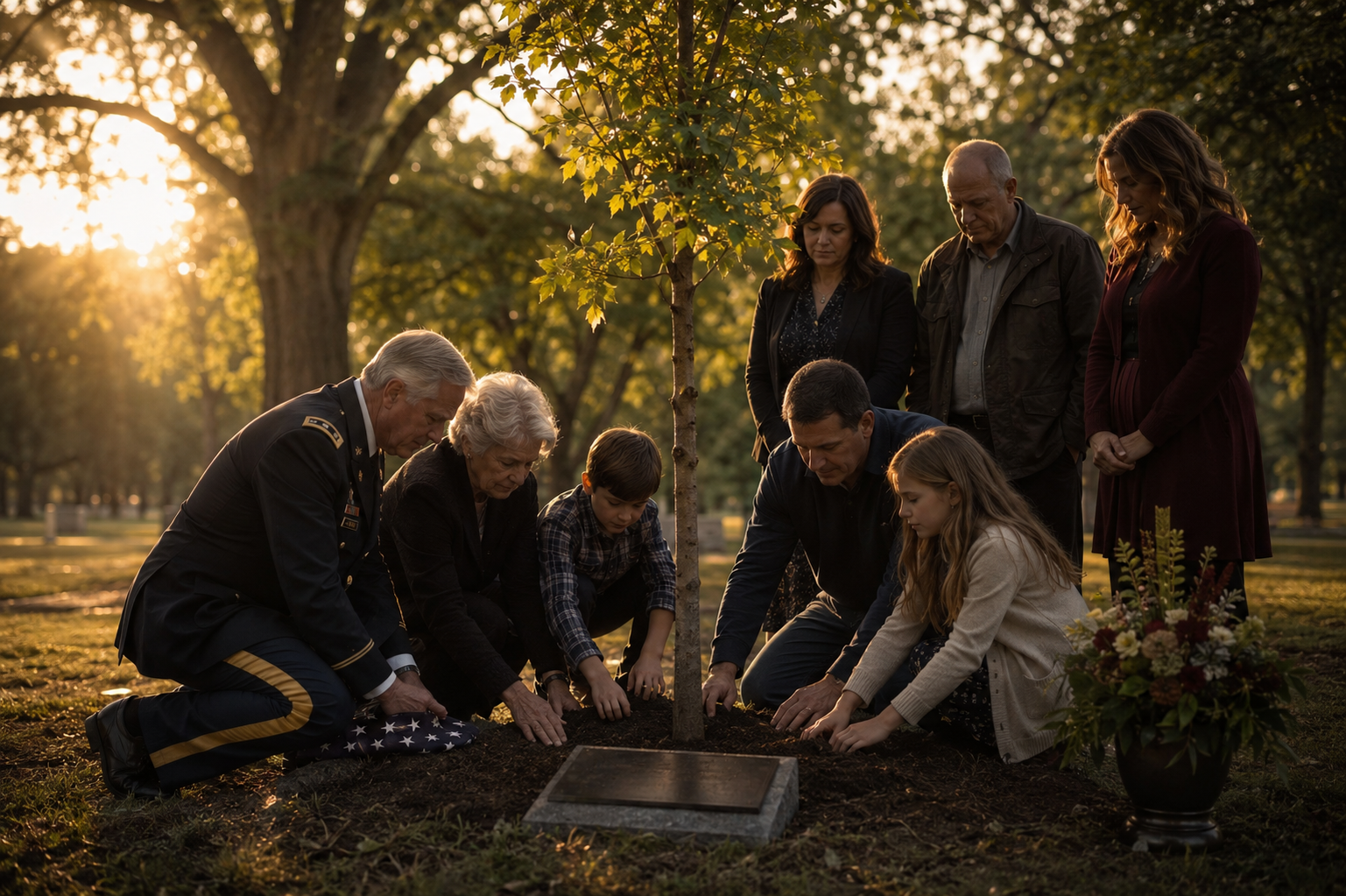
The call comes at dusk. You stand in the kitchen with a paper cup of coffee and a grief that is both enormous and oddly precise. You want to do something that matters. You want to honor a veteran in a way that feels fitting: steady, respectful, and alive. Planting a tree is one option people return to, because it gives a place to return to and a visible, growing form to hold memory.
What a living memorial offers
A tree is not a replacement for a funeral or for simple presence. It is a place, a small landscape change that holds a name and a memory. For families who have served, a living memorial can echo values veterans often held: duty, care for the community, and quiet endurance. This section looks at what to expect and how a tree can carry meaning over time.
Choosing the right tree and place
Picking species and location matters both practically and symbolically. Consider climate, maintenance, and cultural resonance. An olive tree carries long associations with peace and resilience. An oak suggests strength and endurance. Native species often require less care and support local wildlife. When a site is chosen—whether a community grove, a national memorial plot, or a family garden—think about accessibility, permission, and who will tend the tree.
Practical steps to arrange a memorial tree
The process can be straightforward when you break it into steps. Start with conversations, then permissions, then the commemorative details. Below are concrete options to consider.
Who should be involved
Begin by asking close family or the person who will steward the memorial if they want a living tribute. If the veteran served in a unit or a community organization, check whether a group memorial is appropriate. Some families prefer quiet, private plantings. Others welcome community involvement.
- Ask the next of kin for permission and their wishes.
- Check with local authorities if planting in a public space is allowed.
- Consider a location tied to the veteran’s life, such as a hometown park or a family property.
- Choose a species suited to the climate and soil to reduce long-term care needs.
- Decide who will water and care for the tree during the first three years.
Etiquette and wording for a plaque or dedication
Words matter. A short, respectful inscription is usually best. If the family prefers a date and a name, keep the text simple. If the veteran had a rank and unit they wished to be remembered with, confirm spelling and dates first. Avoid political statements or service details that the family would rather keep private.
Three reasons people choose living memorials for veterans
- Lasting presence: Planting a tree creates a living marker that endures beyond ephemeral flowers and cards. It gives a recurring place to visit.
- Community impact: A tree benefits the people around it, providing shade, beauty, and ecological value as it grows.
- Intentional ritual: The act of planting or dedicating can be a meaningful ceremony for family and friends, offering an action when words feel small.
Ways to incorporate service and memory
A memorial can be private, public, or somewhere in between. Below are specific approaches families and communities use.
- Private family planting in a garden with a small plaque and annual visits.
- Community grove where several veterans are honored together with a simple ceremony.
- Partnering with a conservation program to plant in a reforestation area tied to a cause the veteran supported.
- A tree near a veterans’ center or memorial walk that welcomes quiet reflection.
Care, stewardship, and what happens next
A young tree needs particular attention. Many plantings fail in the first two years without a watering plan. If the family cannot commit to ongoing care, consider a partner organization that will steward the tree long term. Ask whether the planting includes a follow-up plan for pruning, mulching, and protection from pests. A realistic plan ensures the memorial survives to become what it promises: a living continuity.
Non-obvious considerations that matter
Beyond species and plaques, small details shape how the memorial ages. Think about visibility and privacy. A tree planted on a roadside may be visible to many but harder to maintain. A tree planted too close to utilities can face removal later. Consider also whether the family prefers seasonal plantings or an evergreen that offers year-round presence. One practical insight that is often overlooked is how a memorial interacts with existing rituals: will people be able to gather there on anniversaries, and is the site sheltered from weather for such gatherings?
Financial and legal notes
Planting in public or protected spaces often requires permits. When donating a tree through an organization, clarify who holds ownership and who is responsible for long-term care. Donations to planting programs can sometimes include acknowledgment letters or an online certificate with GPS coordinates. If you plan on a plaque, check for local rules about material size and placement.
Options for different relationships and personalities
What feels right for a grieving spouse may differ from what a veteran’s childhood friend prefers. Below are specific suggestions for different relationships.
- Spouse: a tree in a private garden with a small dedication and a single annual ritual.
- Parent: a tree planted where family gathers, with a plaque children can read and reflect on.
- Friend or comrade: a community planting day where friends share memories before planting.
- Public tribute: partnering with a conservation or veterans group to plant in a public grove.
Closing: A place to return to
Honoring a veteran with a living memorial asks for care and thought, but it also asks for very little in return. A tree asks us to remember. It grows through seasons, and each year becomes a small holding place for memory. Some families choose to plant a tree as a way to give continuity to that presence. For organizations that plant trees and provide commemorative plaques, see plant a memorial tree for options that include stewardship and a certificate. For more about the way living memorials work, visit Sentitree.
Plant a tree in their memory
A lasting memorial that grows for generations, with a GPS certificate.
Plant a Memorial Tree →