Faith-Based Memorial Gift Ideas for Church Members
Practical, respectful ideas for memorial gifts that align with faith communities. Includes considerations for church rituals and living tributes like trees.
When grief is held in a faith community, gifts need to do two things at once: honor the person who died and fit into the rituals that matter to those who remain. For many congregations, a faith-based memorial gift is not an item to display for a week; it is something that makes space for memory and belongs to a shared life.
Why faith and memory matter together
Religious rituals shape how communities gather, remember, and carry loss forward. A memorial gift for a church member should feel appropriate for a sanctuary, a meeting, or a graveside blessing. It should also leave room for the family's private grief. Thinking carefully about placement, symbolism, and longevity helps the gift feel like part of the congregation’s life rather than an awkward object on a shelf.
Practical memorial gift ideas for congregations and families
Below are suggestions that work in a variety of faith settings. Each idea aims to be meaningful without imposing a particular theology.
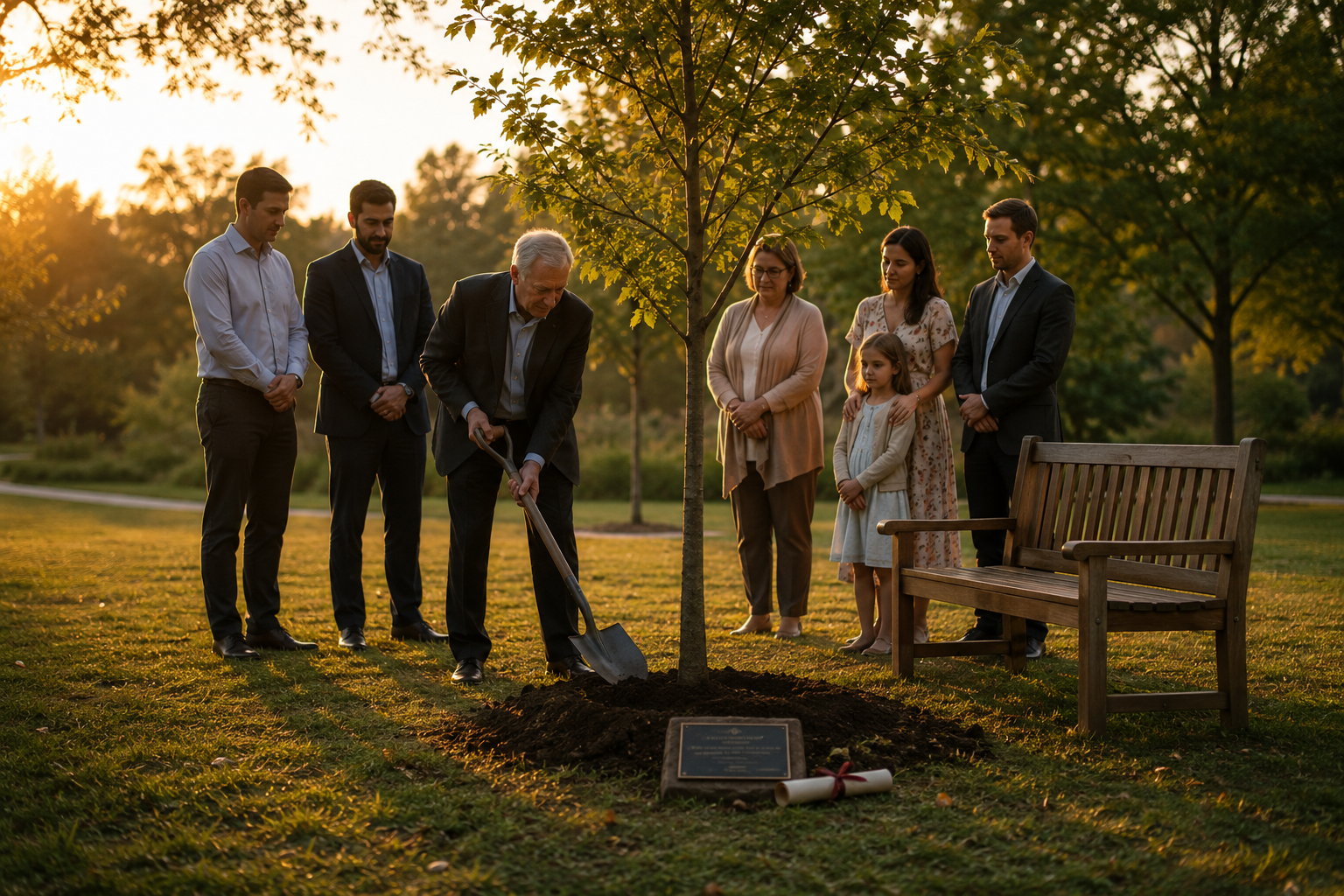
- Planting a tree in a sacred grove or community garden where congregation members can visit.
- Donating a bench or small plaque to a church courtyard with a short, reverent inscription.
- Gifting a collection of hymnals or prayer books in the deceased’s name to the church library.
- Funding a charitable outreach or meal program in the person’s honor, with an acknowledgement in service bulletins.
How a living memorial can fit ritual and space
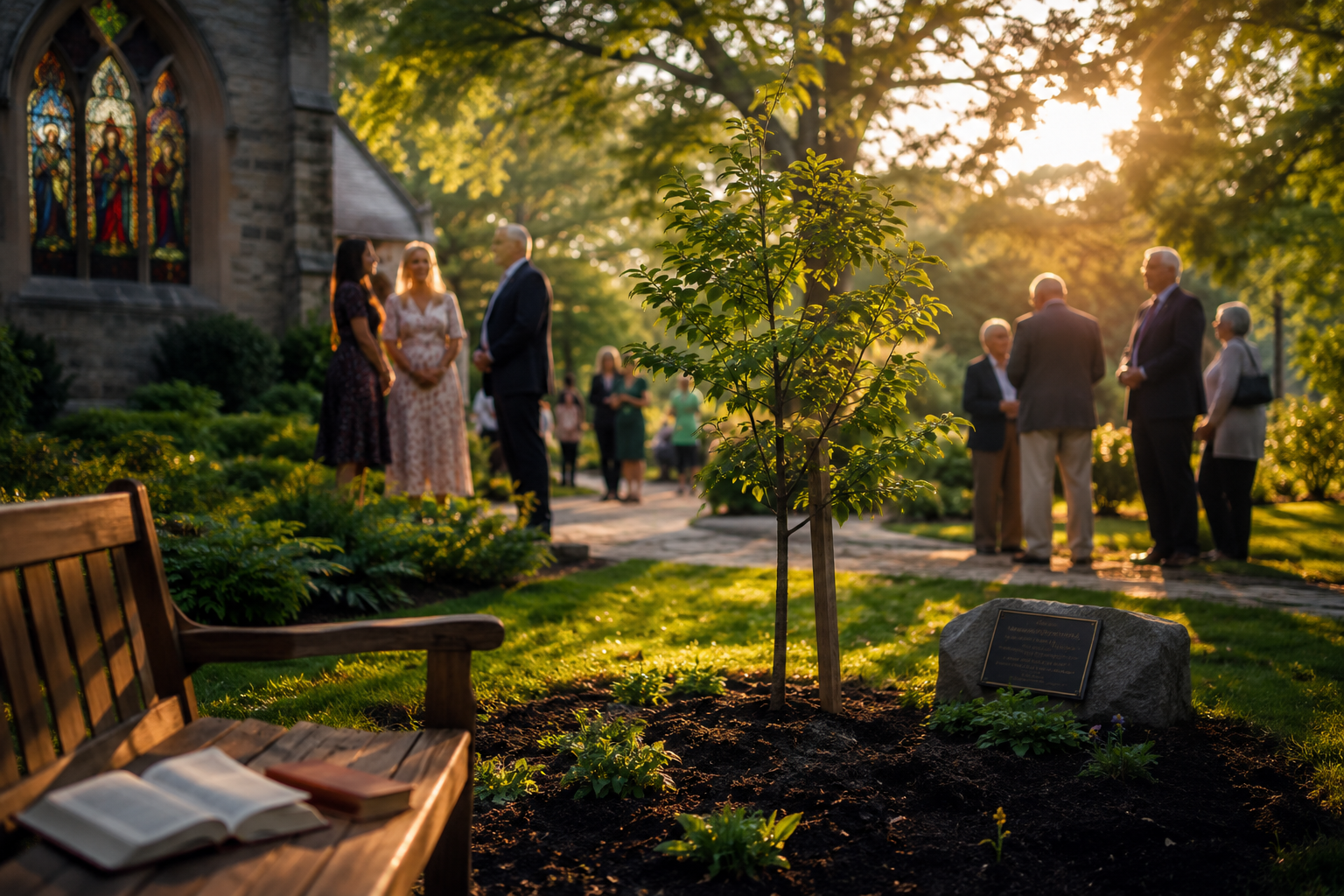
Living gifts, like trees, are often compatible with religious settings because they evolve slowly and become part of the landscape. A young tree planted near a place the community uses for reflection offers a physical focus for anniversaries and prayers. Families sometimes ask for a particular species tied to cultural or scriptural meaning: olive trees for peace, oaks for strength, or local native species to support the land.
Considerations before you give
Check with church leadership about permissions, location, and long-term care. A small committee or a designated caretaker makes it far easier to keep the memorial healthy and visible. If the congregation meets in a shared or urban property, choose plantings or donations that won’t create maintenance burdens.
Reasons a faith-based gift can bring comfort
- Reason title: Presence over presents: A gift that endures gives people a place to return to—a living reminder that is visited, tended, and spoken to during services or private moments.
- Reason title: Ritual compatibility: Gifts that fit into existing religious practices—plantings near prayer spaces, contributions to communal programs—are easier for congregations to accept and incorporate.
- Reason title: Communal care: When a gift benefits the community, it invites collective stewardship and keeps memory alive in shared action.
Who might choose a faith-based living memorial?
Families and friends who want a gift that is both public and private often prefer living tributes. Clergy or lay leaders sometimes request a planting to mark a life of service. Donors who wish to honor a person without sending flowers to a home may give a gift that the whole congregation can acknowledge.
Ideas for presenting the gift
Presentation matters. Consider a short note or card that explains the gift, a small program insert for the service, or a dedicated moment in a memorial ceremony. If the gift includes a plaque or certificate, keep wording simple and rooted in the person’s life—dates, a short phrase, and who made the gift.
For families exploring living memorials, organizations that coordinate plantings can handle logistics and provide a certificate or update when the planting happens. Many find this practical: it removes guesswork and ensures the memorial is placed with care. See Sentitree for examples of how living tributes can be arranged, and for resources that explain species selection and location options.
Next steps and respect for tradition
Start by asking a few courteous questions: Will the church allow plantings? Who will maintain the gift? Is there a preferred species or placement? A small conversation prevents missteps and shows respect for communal practices. For families who prefer an off-site option, a planting in a protected forest or a community grove offers a quiet alternative that still honors faith and memory.
Consider a living memorial
Some families find that a tree or other living tribute provides a respectful, faith-compatible way to remember a loved one. It becomes part of common ground—visited on anniversaries and tended by the community—rather than an object that is quickly forgotten.
Plant a tree in their memory
A lasting memorial that grows for generations, with a GPS certificate.
Plant a Memorial Tree →